
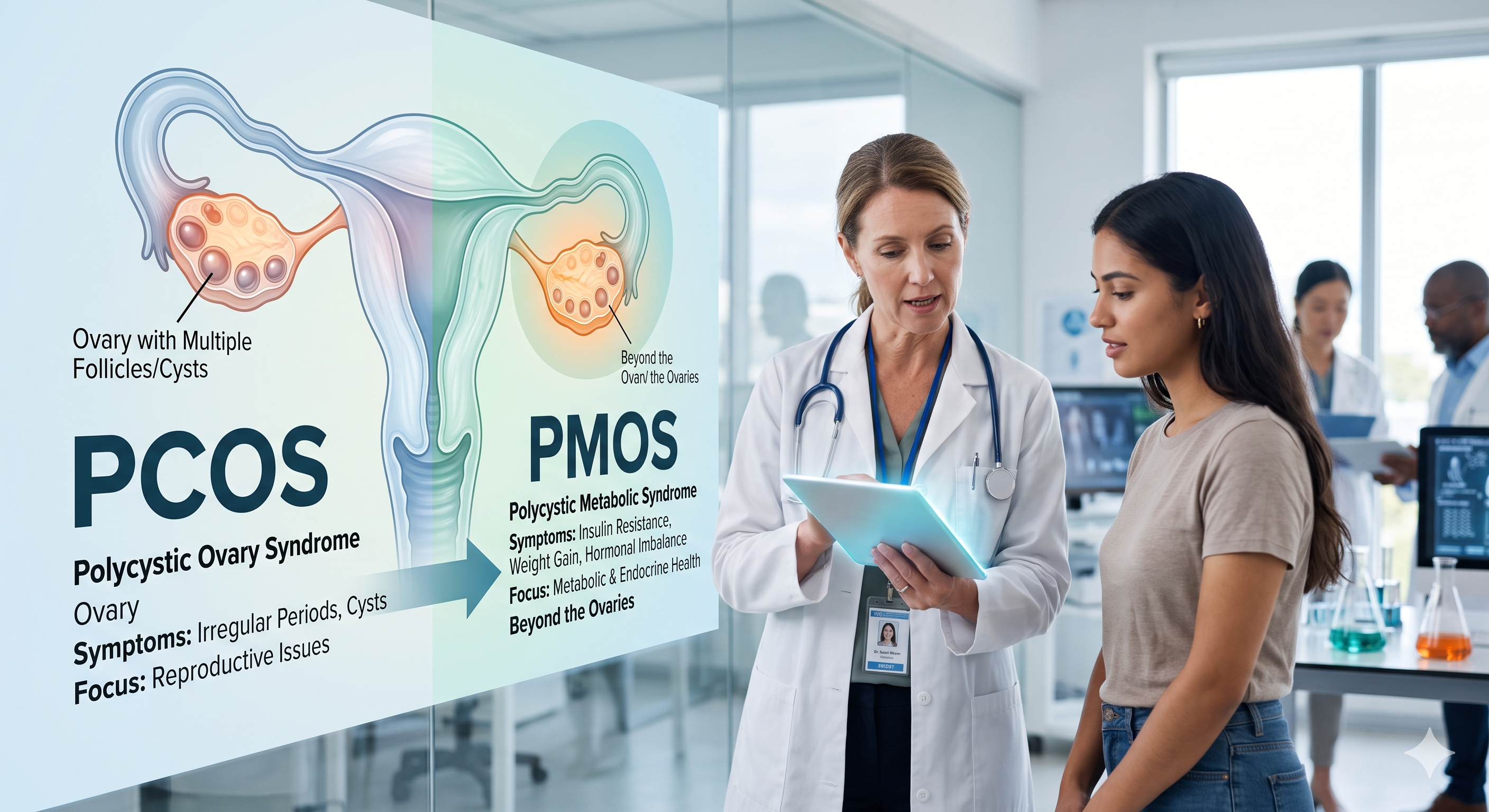
Why PCOS is Becoming PMOS: Shifting the Medical Focus From Cysts to Metabolism
For many years, millions of women have been diagnosed with a condition that just did not include a complete picture: Polycystic Ovary Syndrome (PCOS).
Those who have suffered from this condition are familiar with the fact that it is more than an ovarian problem. It impacts your fertility, sleep, skin health, weight, mental health, and energy.
The international medical community just took a historical first step in a global milestone that has been published in The Lancet, the international medical journal, and the condition has now been renamed Polyendocrine Metabolic Ovarian Syndrome (PMOS).
What does it mean to you, your body, and your path to parenthood?
Why the Word “Cysts” Was Lying to You
The original name was very misleading indeed. You don’t have any abnormal cysts on your ovaries. Eggs grow in completely normal, small fluid-filled sacs, which were once diagnosed by doctors using ultrasound scans, and are called “cysts”.
This hormonal traffic jam means these follicles do not grow to become mature and release an egg.
The old term reduced a complex and comprehensive metabolic condition to a simple “ovarian problem”. This resulted in numerous years of misdiagnosis and delayed diagnosis in the clinic as well as unnecessary stigma surrounding fertility.
Decoding the New Name: PMOS
The new name, PMOS, finally looks at your health from a telescope instead of a microscope. Let’s look at these more concise and impactful components:
- Polyendocrine: Poly is many and endocrine is hormones. This is because there are more than one dysfunctional hormone system, it is not just the reproductive system.
- Metabolic: This the essential additional. Represents the use of insulin, sugar and energy in the body. It validates the fixed changes in weight, fatigue and other ongoing cardiovascular symptoms experienced by patients.
- Ovarian: Your ovaries are still a factor in the equation, as they can contribute to problems with ovulation, but they’re not the only trouble makers.
The one thing to remember: It’s not a failure of the ovaries! It’s a complete body hormonal and metabolic conundrum.
The Genetic Puzzle: What Causes PMOS?
One of the most frequently asked questions by patients is, “Why do I have this?The precise cause is still being investigated but genetic and environmental factors are known to play a complex role in the development of PMOS.
If your mother or sister suffered from irregular periods, severe acne as an adult, or type 2 diabetes, then you are at a high risk of developing PMOS. Genes are not your fate though. These genes can be triggered by external factors such as high levels of stress, lack of sleep, exposure to endocrine disruptors and diets rich in ultra-processed sugars.
Realizing that PMOS is not personal allows you to overcome the blaming stage and address the situation. Instead, you’ll learn more about the cutting edge medical strategies and accurate lifestyle adjustments that will help you manage hormones and fertility!
What Does This Mean for Your IVF Journey?
You need not be concerned if you’re trying to conceive, or undergoing fertility treatment.
No sudden changes of your medical condition will occur. The only thing that has differed is how the medical world will be assessing and assisting you with your problem:
- Personalized IVF Protocol: We know that metabolic fitness plays a vital role in egg health. The switch to PMOS is our way of ensuring that you do not experience any side effects like Ovarian Hyperstimulation Syndrome (OHSS) during your treatment.
“Metabolic Environment” is optimized: Not only egg numbers are taken into account. Optimizing insulin and blood sugar levels before an embryo transfer is a much better environment for pregnancy. - Transition Window of Three Years: Transition Window of Three Years, specialized regarding transition through the Health Care Networks. Both will be noted in medical documents until the completion of the transition process in 2028 International Guideline.
Conclusion: A New Era of Validation and Care
PCOS to PMOS is more than just a name change. It’s a big success for patient advocacy. Women were told for years that if your doctor is to look into the ovaries it is not enough as they need to understand the metabolism and hormonal interaction that goes on in the body on a day to day basis.
This condition is defined correctly and allows the medical community to research, diagnose, and treat you as a whole person.
Our goal is always the same at our clinic, Little Angel IVF, to treat you as a whole person, to optimize your metabolic health, and to make the shortest, safest way to hold your healthy baby. This is not something that you have to do on your own anymore because the entire scenario now lies in the hands of Medicine.
Frequently Asked Questions
1. Is PMOS a new disease, or is it just PCOS?
It’s the same disease. The condition remains the same; only the scientific name and the understanding of the condition have evolved into a more accurate one.
2. Does my existing diagnosis change right now?
No, your current diagnosis is 100% accurate. No tests need to be repeated. Transfer of your medical records and insurance codes will be seamless over the next 3 years.
3. Will my prescriptions or fertility treatments change?
Not automatically. Successful methods such as life changes, insulin sensitizing, and advanced IVF treatments are still very effective. Your care plan will simply be enhanced with a better focus on metabolic checking.
4. I was told I don’t have “cysts” on my scan. Can I still have PMOS?
Yes, absolutely. This is the reason for the name change. Many women who have this condition do not have a ‘polycystic’ look on ultrasound, but still have the hormonal and metabolic changes.
5. What should I do next?
Carry out your treatment regimen without any fear. Make an appointment with us so that we can have a conversation about what we can do to further optimize these metabolic and endocrine markers and give you the greatest opportunity to have a safe and successful pregnancy!



Leave a Reply